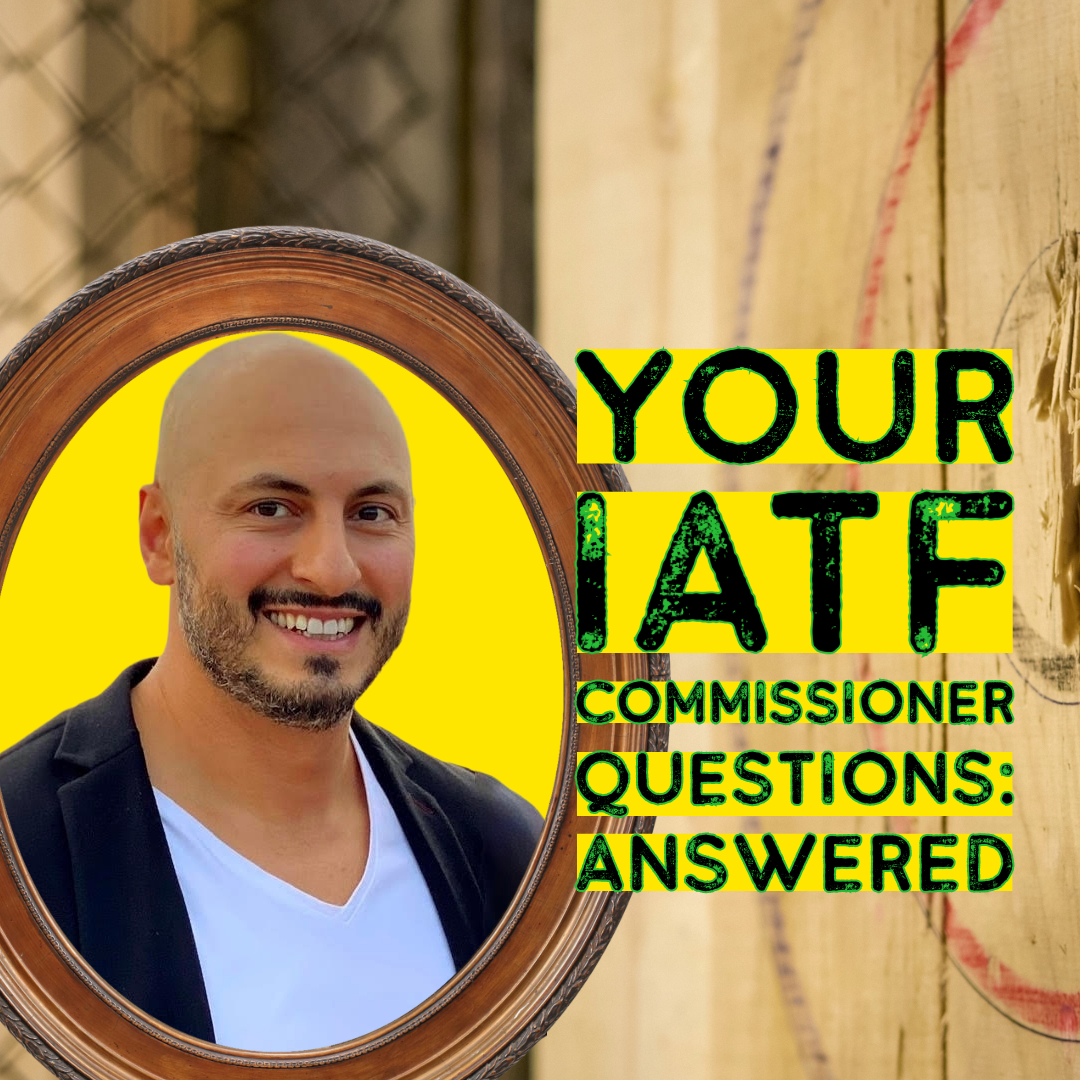
Hey dear reader. A few weeks ago, I asked for questions from the IATF community to send to the new IATF commissioner, Houman Javidnia. I had a few ground rules for myself: actually ask the questions more or less as they were asked (modified in some cases for clarity, or if questions were very similar combining them), and to try my best to…well, not press Houman for the answers, but not shield him from answering them, either.
I’ll say that this is a pretty extensive question set, overall, and he was kind enough to take the time to answer as much as he could (lots of the questions were about the future/planning, and he was honest when he didn’t have a clear answer to offer).
At any rate, here are the answers to the questions you, dear throwkin, asked me to ask him, with a few I wanted to ask him, too.
Background and expectations
How were you selected to be the new IATF commissioner, and how do you feel about it?
My selection was determined by our five-member ownership board based on key criteria: business acumen, leadership capability, strategic foresight, and a proven track record of execution, as demonstrated throughout my tenure at BATL. I was also asked by a couple of the board members whether I believe the IATF has a future worth fighting for, my answer was simple… I am here to fight for it.
What’s your background in the sport? What is your life outside of the sport?
My history in the sport includes active league participation, contributing to the 2020 IATC at the Dome, and subsequently leading the operational organization for all BATL-hosted IATC events from 2021 through 2026. Notably helping BATL survive the pandemic until now.
My life outside of the sport… My wife and I are getting ready to welcome our first child in November. I’m also an avid sports fan. Outside of throwing in league, I play in an organized hockey league as well as pickup basketball regularly when time permits.
You’re entering IATF leadership at a tricky time. What do you see as the big issues/challenges we face as a community today – and how are those different than what the IATF as an organization faces?
I certainly agree that this is a tricky time and I see a fair bit of vitriol and distrust towards the IATF. We can collectively decide if we want to get through it and grow as a community by being respectful to each other and bringing positivity and unity to the forefront. From the community standpoint, I have a decent understanding of the community sentiment, and my goal is to work towards getting to the root of these pain points, find the disconnect and ultimately solve what we can.
From an organizational standpoint, the primary challenge facing the IATF is restoring credibility, particularly following delays in prize pool payouts. Having recently taken over oversight of the IATF, I have identified strategic gaps connecting our short-term objectives with long-term goals, as well as the need to clearly define those targets. Once established, these plans must be communicated externally in a transparent, thorough, and timely manner.
Addressing past challenges in the IATF
There have been some really big, really difficult miscommunications/under-communications between IATF membership and IATF leadership. How are you planning to correct that issue? Is it a matter of how things are communicated, timing, or something else?
As noted in my response to question 3, my priority is to identify the precise nature of these communication gaps. Once we pinpoint where the issues lie, I will establish a structured communications strategy to address them directly. Prioritizing transparent and effective outreach from the IATF to our community is vital.
It feels like the sport is hemorrhaging venues and throwers over the past few years. How is the IATF thinking about how to preserve the sport (is it a matter of on-boarding more thoroughly, creating a map of location requirements (like Trader Joe’s or other franchised businesses), or is the reality of it that venues need to figure out those questions on their own/not assume the IATF can help with business trends?
I’m sharing three charts illustrating two-year trends across league participation, unique throwers, and participating venues:
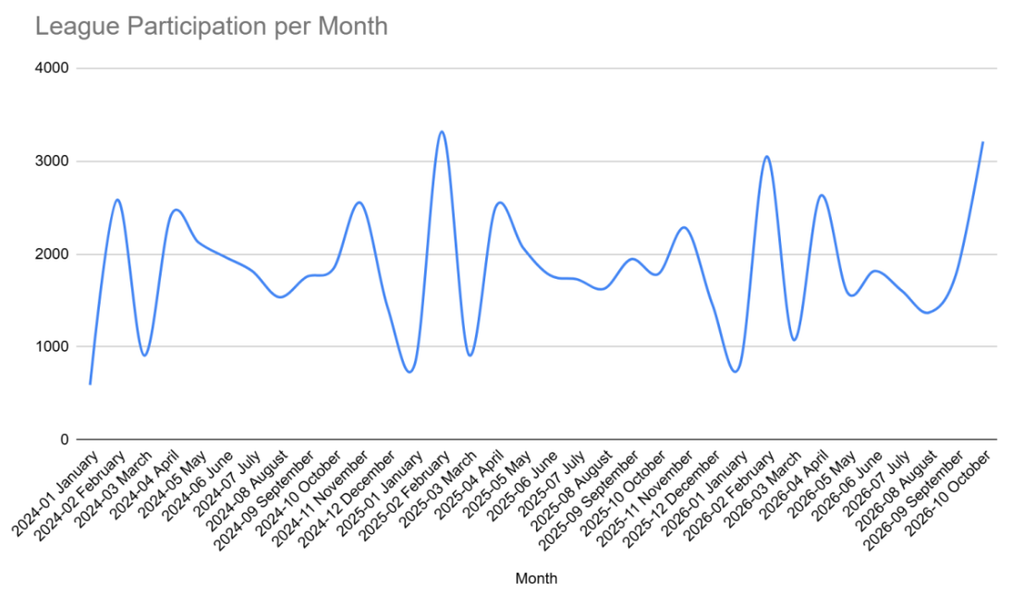
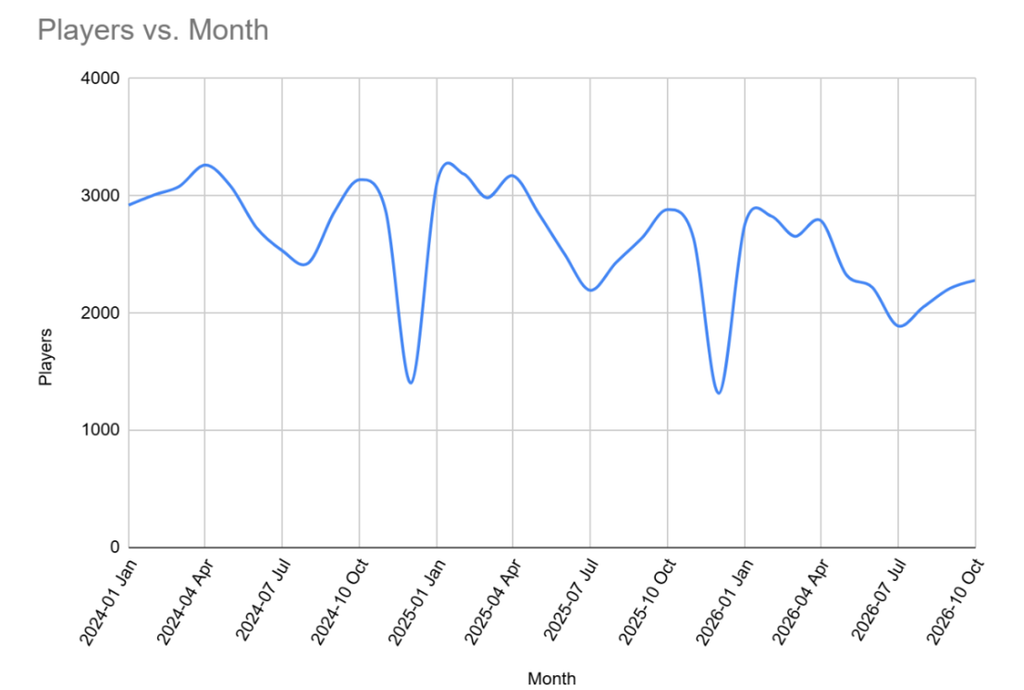
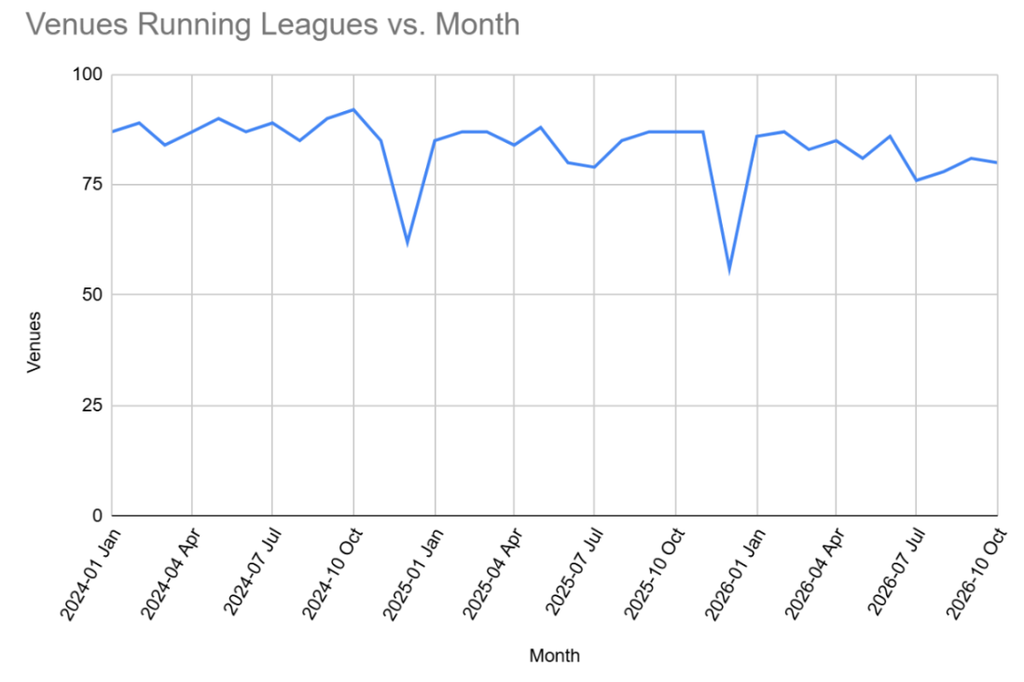
As shown, overall league participation remains steady, though we have observed a slight decline in unique throwers over time.
Meanwhile, the number of IATF affiliated venues offering leagues has stayed relatively consistent. Our immediate priority is to support owner/operators, which has been the central focus of our initial discussions with them. The scope of support we provide will be tailored on a case-by-case basis. Moving forward, we will focus on targeted marketing initiatives to attract new throwers to the sport.
Why should venues trust an organization to lead the way on growth when that organization itself is struggling with solvency?
This restructuring of both BATL and the IATF addresses those exact challenges. It is no secret that both organizations faced significant financial headwinds, a trend widespread across the industry, particularly post-2020.
Market research conducted with the BATL team two years ago revealed that the initial novelty of axe throwing had largely worn off. To adapt, BATL successfully returned to profitability by diversifying our offerings (including expanded food, beverage, and activity options to name a few) to engage a broader demographic, while simultaneously optimizing our cost structure.
We are applying these same principles to the IATF. Through operational restructuring, tech development and ongoing strategic planning, we have established a clear path to long term sustainability and profitability, allowing us to better support and share resources with the venue owners and operators.
BATL Pickering and BATL London are not quite success stories in the sport’s history of venues and represent a concern some throwers have around the ability of new leadership to give practical, applicable and effective advice to other, independent venues. Can you speak at all on what happened with those venues, what was learned, and how those lessons are going to help other venues?
2 out of 13 BATL venues facing league participation challenges or decline does not indicate a major problem across BATL or the Federation. Outside of league, Pickering is actually doing quite well in terms of revenue growth and London has improved some but is a work in progress.
Anything beyond that has to do with other internal personnel challenges that BATL as a business is addressing and I’m not comfortable speaking to it when it impacts select individuals, as that does not align with our values.
Future IATF direction
BATL and the IATF are now functionally under the same management, potentially giving BATL an out-sized leverage in determining the future of the sport. What steps will the IATF take to make sure that BATL is not able to use this leverage against smaller, independent venues, particularly in markets where indies are competing with BATL?

BATL and the IATF have shared management from the very beginning as Matt was the Commissioner of IATF and CEO of BATL up until this summer. To address concerns about “out-sized leverage,” it is worth clarifying that BATL has consistently served as a key supportive resource for the IATF. This includes providing marketing assistance, hosting venue photo and video shoots, acting as a testing environment for new rules or equipment, and handling merchandise storage and fulfillment.
Furthermore, to ensure fairness and counter any perception of bias toward BATL, the IATF maintains a strict commitment to integrity, often lightheartedly describing an unwritten practice of keeping its distance from BATL whenever possible.
To put a finer point on it, would you say that BATL and the IATF are in fact tied together (and will continue to be), as the nature of that relationship is such that the IATF views BATL as a mutually-beneficial partner?
I think the discomfort of IATF members is how the shared management has always existed, and the benefits of that relationship haven’t been explained/the worry about that relationship dynamic hasn’t necessarily been directly addressed in the past.
Chris Collins is dedicated almost exclusively to the IATF. As additional roles are developed over the coming months, I will make the appropriate announcements. At this stage, the primary connection between the two organizations is my dual role.
While I expect to maintain this arrangement through most of next year, I plan to make some necessary changes on the BATL side as well in the winter of 2027, as working 60 to 80 hours a week is not sustainable, especially with a new child on the way.
Ultimately, it would be helpful to better understand the specific concerns regarding how shared management is perceived to negatively impact the IATF so I can address them more directly.
Will the IATF commit to establishing some mechanism (for example, a trust account that is wholly separate from their operations account) to guarantee tournament winners receive their earnings in a timely and transparent manner?
Financial separation of BATL and IATF has been a point of concern for our internal teams more than anything. A few key steps I immediately took as soon as the business fell under my purview was to ensure a clean and separate P&L, Cash Flow and separate bank accounts used for the 2 businesses. With this already complete, we intend to always distribute the prize pools in a timely manner.
Eyes on the sport
Many local-to-venue throwers see the recent changes at BATL as detrimental to the growth of leagues. Given your own past comments on the economic value of leagues, how do you win those players back, and what are you going to do to encourage league growth from an institutional perspective?
From an IATF perspective, our priority is finding ways to make leagues more cost effective to operate.

To support this, we are investing in technological and operational resources designed to help owners/operators run their locations more efficiently. This development will also yield additional broader benefits, which I will address shortly. Beyond operational efficiency, we aim to reposition axe throwing and league play as both an accessible, engaging recreational activity and a compelling competitive sport. Our future marketing initiatives will focus heavily on driving this message forward.
Regarding BATL, it is important to recognize the significant cost increases driven by post 2020 inflation. To put this in perspective, in Ontario – where most BATL venues operate – the cost of target boards has increased from approximately $5 to over $28, while the minimum wage rose from $14.00 to $17.60. Meanwhile, our league fees have only modestly adjusted from $135 to $145 over the same period.
We remain deeply committed to supporting our leagues, consolidating smaller groups into larger ones where necessary to keep them viable. While participant attrition is never our goal, we must strike a sustainable balance to avoid continuing to run leagues at a loss.
We love throwing, we love watching the games we’re emotionally connected to, but it’s not the most exciting sport to watch, otherwise. The rules are simplistic; there are basically no strategies involved (especially when always going clutch is (typically the expectation). If the IATF sees selling the sport for an external audience as essential to its growth, are they considering rule changes, and if so do they have any initial thoughts on the subject?
Rule changes are always under consideration with the right balance in mind. For example, seeing Tyler Flynn make the tactical decision to not automatically go clutch in the IATC final was an exciting moment for the sport, though that is just one perspective. Think of baseball: while I love the sport, it is not filled with constant action across all nine innings. However, it offers defining highlight moments, and I believe we can capture similar highlights for axe throwing!
Just to be clear: nothing is currently in the works, rules wise? The IATF is just generally open to the idea of adjusting the rule set, but there is nothing compelling, so far, in discussion specifically?
No rule changes are currently in development. We have several strategic priorities to address before evaluating whether refining the rule set is necessary or beneficial. I do not anticipate reviewing this until Q2 or Q3 of 2027, following our primary focus on IATC in June 2027.
Can you address your thinking around “getting eyes on the sport” versus building the community and strengthening leagues. What are we, as a community, missing about this decision?
Marketing the sport and building league participation are mutually reinforcing goals. The general public often remains unfamiliar with the excitement and strong sense of community that define axe throwing competitions. It is the IATF’s responsibility to showcase that experience to a broader audience. Ultimately, every successful competitive or niche sport relies on highlight reels and accessible coverage to engage followers and drive growth.
I absolutely understand the value and importance of showcasing throwing competition highlights. What I’m curious about: is the IATF going to focus exclusively on top-tier throwing/throwers, or is there consideration around balancing top throwing events/reels/throwers with “the rest of us” (community throwers, leagues, smaller events, etc.) highlights and promotion?

As I noted initially, showcasing the excitement and strong sense of community through highlight reels and broader marketing will not be exclusive to top-tier events or elite throwers.
Drawing parallels from both mainstream and niche sports helps illustrate our goal and intent: growing up, I knew I wouldn’t become Michael Jordan or Wayne Gretzky, but seeing that high level of competition inspired me to try both sports and I still play them recreationally today.
I also want to emphasize that marketing is only one step forward; there are many additional opportunities ahead, such as lowering barriers to entry and further leveraging grassroots and social play.
What is the IATF’s plan to grow outside of the continental United States and Canada? There are very few affiliated venues in Europe and the Asia-Pacific region so what are the IATF and the new leadership going to do to help grow and support the sport in those regions? What are the IATF’s plans to convince other venues to join the organization, and are there any plans to reach out to organizations such as KATTA in Europe to attempt to combine thrower bases and work together, growing the sport, rather than pulling the sport in different directions and splitting an already small thrower base?
While I recognize this is a multi-part question, our primary focus must remain on the immediate priorities facing us.
As a Federation, we need to regroup and resolve our core operational gaps. Once those fundamental issues are addressed and we provide valuable resources to venue owners and operators, I am confident that positive momentum and targeted outreach will naturally encourage more venues to join the IATF.
I appreciate Houman for answering the questions I sent along from all of you, and hope as his tenure being commissioner rolls along, I’ll be able to revisit some of his answers and do a sorta check-in as to where things stand/add more clarity as initiatives and such come to exist. There’s a lot on the docket, to be sure.
Also, if you’re still reading, congratulations. This is like, 2,600 words. Get yourself a personal pan pizza. It counts for the BOOK IT! program, I think.
Discover more from The Axe Badger
Subscribe to get the latest posts sent to your email.