Here’s the thing about any conversation with P.K.: it inevitably results in at least one of us considering the deep, secret truths about axe throwing. Philosophical level, I mean. The stuff that, were it to escape from the confines of a venue and make its way onto the street, would result in the “normals” throwing things at us whilst shouting “neeerrrrdddsss” and calling some authority figures to arrest us.
Maybe that’s hyperbole, but I don’t want to find out if it’s true.
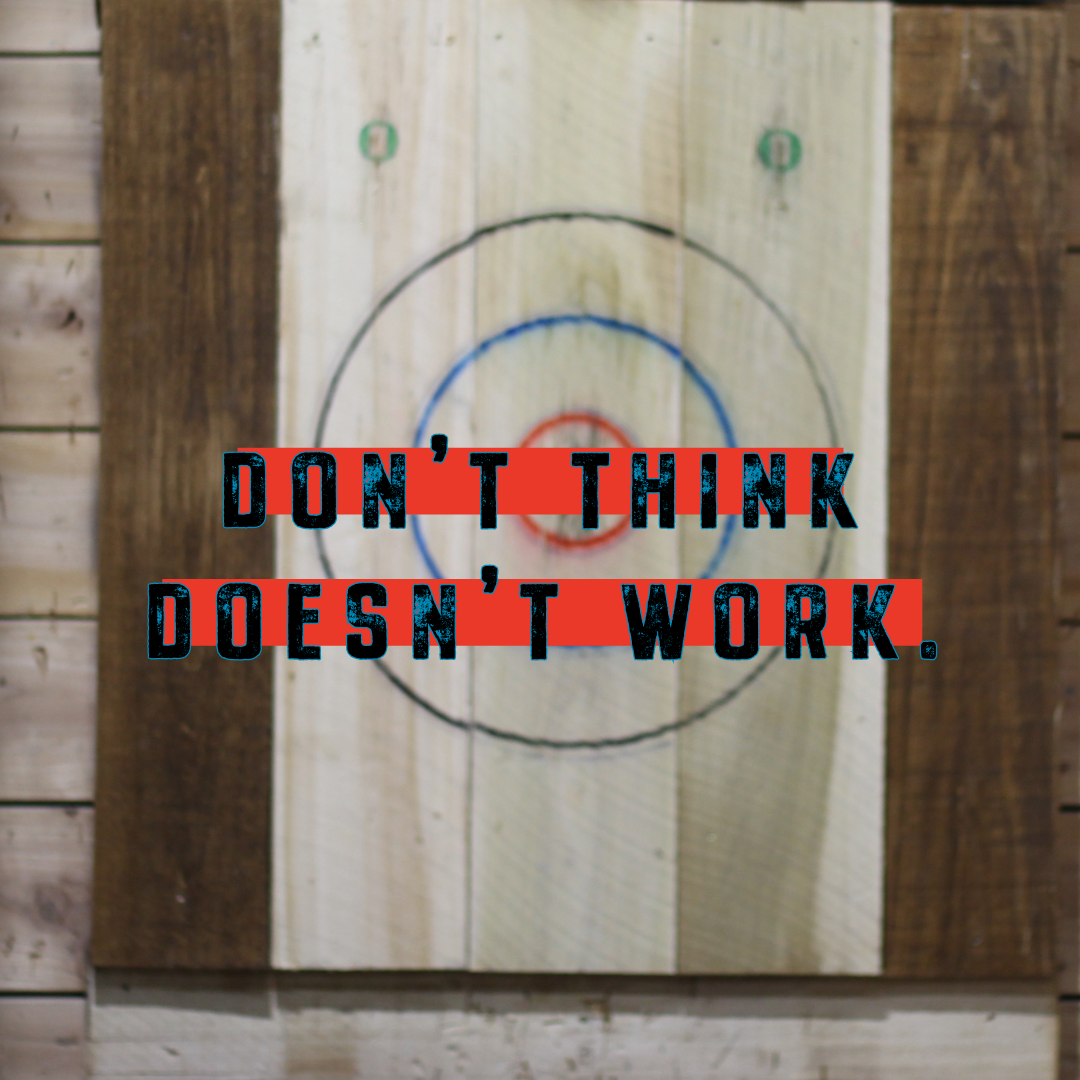
Anyway, at the latest gathering of our brains, P.K. and I were discussing, you freaking guessed it, axe throwing (novel. Unique.) and the oft offered advice of “don’t think.”
We both agreed that the advice, on the surface, is absolute bunk. For one, it’s impossible. Yer gonna think. And if you try to think about not thinking, dear reader, you’re gonna enter a sort of ouroboros of thought. It’s not good for anybody.
The phrase, we agreed (I think we agreed. PK will correct me if not), was an oversimplification of a very true, very good bit of advice, which I’ll try to illuminate here.
It’s not “don’t think.” It’s “Don’t think about the throw.”
Oh I can hear you now, dear reader. Ohhhh buddy I can feel the electrical currents going from your wonderful brain to your fingie tips as you rush to type out a response to that subhead:
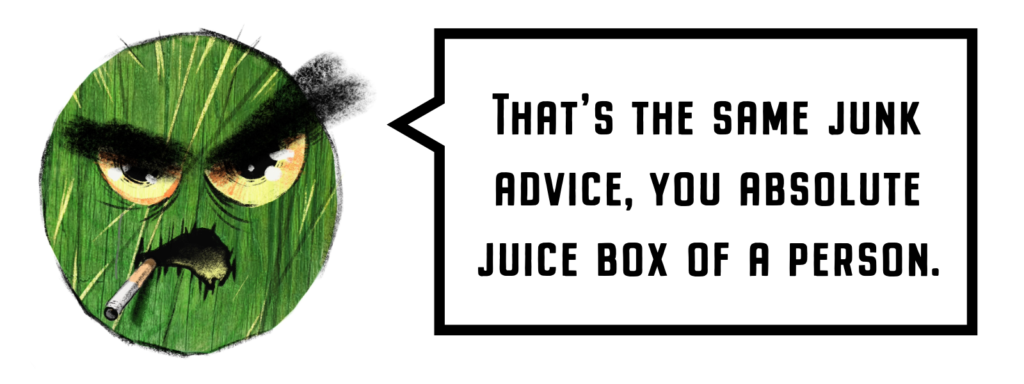
But give me just a second, voice-of-the-reader Clutchy. Let me explain myself, here. Sheesh.
What that “don’t think” advice is pointing to, what it’s trying to convey in too simple a way, is that thinking about that individual throw–the one you’re about to do–is the wrong focus. It creates too much pressure. Too much expectation. And you don’t need any of that junk. You might think you do, you might even find it comforting, but it’s all wrong.
So what does one think about instead? Well, you think about axe throwing. Specifically, whatever your process is for a perfect, consistent throw.

Just let me explain it. Allow my sovereignty of this thinking lane.
So thinking about the throw before you – the immediate throw – can’t really help you. Like, it’s not inherently bad or good, but it’s not advancing your ability to throw as well as you can. Maybe you’re nervous, or you’re tired. Maybe you’re angry–whatever it is, it puts too much focus on what’s happening in the moment. And not the steps that make a throw act the way you want it to act.
Thinking about throwing means thinking about your own steps for a good result.
Dear reader, I’m talking about a checklist. Let’s stop dancing about the board water, huh?
Checklists are proven. PROVEN to lead to better outcomes. It’s why checklists are used in surgery. Why they’re used in aviation. In high-stress situations, falling back on a checklist can help you shed some of that stress and focus on the elements that help you get that bull or that clutch. As an example, I’ll share mine with you. This one in particular is for a run-of-the-mill Bullseye:
- Ball of leading foot on black line.
- “Stepping” foot behind, in line with left shoulder.
- Axe pulled back to eye level, with hand in position to take the weight of the axe on palm just below index finger
- “Lock” position of axe
- Step
- After step, realign position of eye/hand
- Throw.
When I do axe throwing well, I run through that checklist every time. And to be clear, there’s a lot of wiggle in there (much like in me. Heyooooooo I’m a wiggly lil’ guy). I’m not necessarily saying all of those things in my brain noodles every time, but I am…hmm…I’m feeling that all of those points are checked off before anything actually hits the board. Does that make sense? I’m drilling all of those steps into my throws when I practice, so that when I’m in league or at a tourney, I can auto-magically fall back into them – regardless of whether I’m tired or frustrated or whatever.
Consistent process beats reactive action
You know what I’m not thinking about? The individual throw I’m doing right at that moment. I’m thinking about my process, and my checklist. If I do all of that nonsense in order, my chances of landing the axe where I mean to goes up. Simple as that. Proof in pudding.
If I fail to keep those steps in mind, well, it’s 50/50* that the axe goes where I want it to.
And, to be absolutely clear and honest: it might be 60/40* when I do keep the checklist in mind. But that number seems to be going up each season, and that’s still, you know, better.
The logic behind this is sound: if you’re just reacting to your previous throw, or your expectations to the next throw, your muscle memory is only gonna get you so far. Sure, it’s possible that you do the same throw 10,000 times and it’s just, you know, locked in, but that also means that if even one element of that throw is off, you’re gonna make easy-to-fix mistakes. With a mental checklist, you’re ensuring that your set up/throw is not only consistent, but adjustable (if you notice you’re over rotating/under rotating, you can identify which step needs to change, and change it, for example).
So give it a try. See if it helps. Clutchy knows, it’s helped me out quite a bit in my axe throwing adventures this year, and maybe it’ll make a difference for you, too!
*Both of these numbers are of course made up. How could I possibly quantify it? But I stand by the statement: following a brain checklist, a brainlist if you like, does really help me stay on target**.
**Yeah, pun intended. Get wrecked.
Discover more from The Axe Badger
Subscribe to get the latest posts sent to your email.